
FAQs
Frequently Asked Questions
What are verrucae?
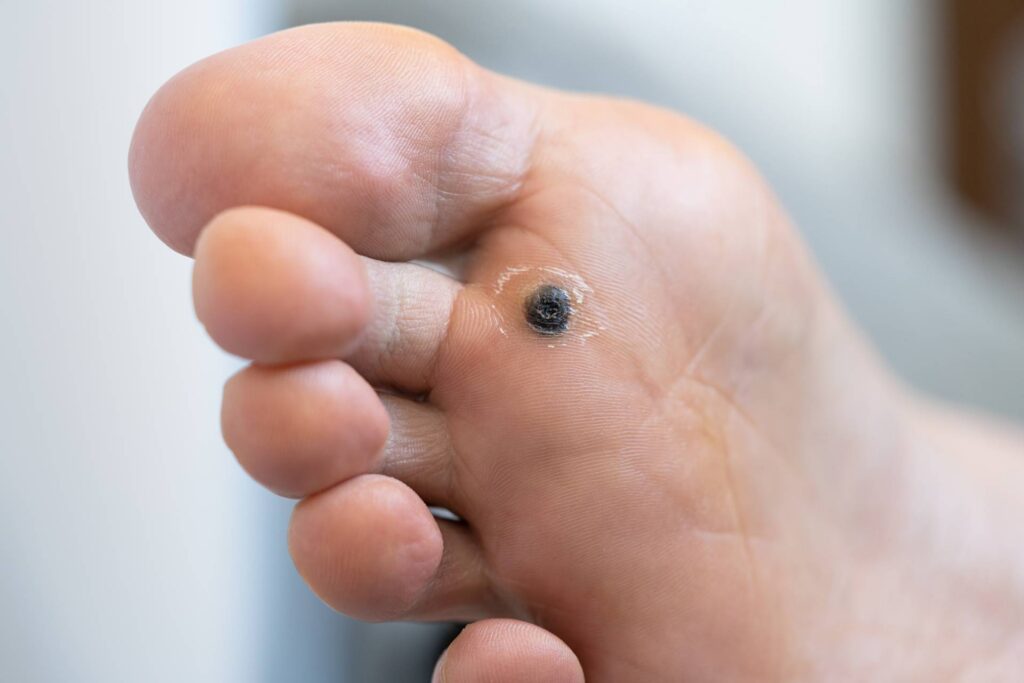
Verrucae, also known as plantar warts, are caused by a viral infection in the skin. They often develop on weight-bearing areas of the foot, such as the heel or ball of the foot, where pressure can make them painful.
They may appear as:
- Small, rough growths on the sole of the foot
- Areas of thickened skin with a central core
- Lesions with tiny black dots, which are small blood vessels
- Pain when walking or standing
Because of their location, verrucae can sometimes be mistaken for corns and callus.
Why do verrucae become painful?
The virus itself does not always cause discomfort, but when a verruca develops on a weight-bearing area, pressure can push it deeper into the skin.
This can lead to:
- Pain when walking or standing
- Increased thickness of surrounding skin
- Difficulty with activity or exercise
If left untreated, verrucae may persist or spread.
How we assess verrucae
At Torbay Footcare, we begin with a thorough assessment to confirm the diagnosis and understand how the verruca is affecting you.
We will consider:
- The size and location of the lesion
- How long it has been present
- Your activity level and lifestyle
- Any previous treatments you have tried
This allows us to recommend the most suitable treatment for your specific case.
Treatment options for verrucae
There is no single treatment that works for everyone. That is why we offer a range of modern and traditional options, tailored to your needs.
These may include:
- CryoIQ® PRO (Cryotherapy Treatment) to freeze and remove affected tissue
- Verrutop® Treatment to break down infected skin gradually
- Swift® Microwave Therapy to stimulate your immune system to clear the virus
- K-Laser Therapy to support healing and reduce inflammation
- Topical and occlusive therapies
- Verruca needling where appropriate
Your clinician will guide you through the options and recommend the most effective approach for your situation.
Why personalised treatment matters
Verrucae can vary significantly from person to person. Factors such as immune response, location, and duration all influence how well a treatment works.
A personalised approach allows us to:
- Select the most appropriate treatment
- Adjust your plan as needed
- Improve the likelihood of successful resolution
How long does treatment take?
The time required to resolve a verruca can vary. Some respond quickly, while others may take longer, particularly if they have been present for an extended period.
We will provide realistic expectations and support you throughout the process.
When should you seek treatment?
It is a good idea to seek professional advice if:
- The verruca is painful or affecting your daily activity
- It has not improved with over-the-counter treatments
- It is spreading or increasing in size
- You are unsure whether it is a verruca
Early treatment can often lead to better outcomes.
Your personalised treatment plan
At Torbay Footcare, we take a tailored approach to verruca care. We will assess your condition, explain your options clearly, and create a treatment plan suited to your needs.
Our focus is on achieving effective results while keeping your treatment experience as comfortable as possible.
Why choose Torbay Footcare?
Based in Paignton, we are trusted by patients across Torquay and Brixham for modern, effective verruca treatment. We offer a wide range of options, allowing us to adapt your care to achieve the best possible outcome.
Our goal is to help you return to pain-free movement and prevent the problem from recurring.